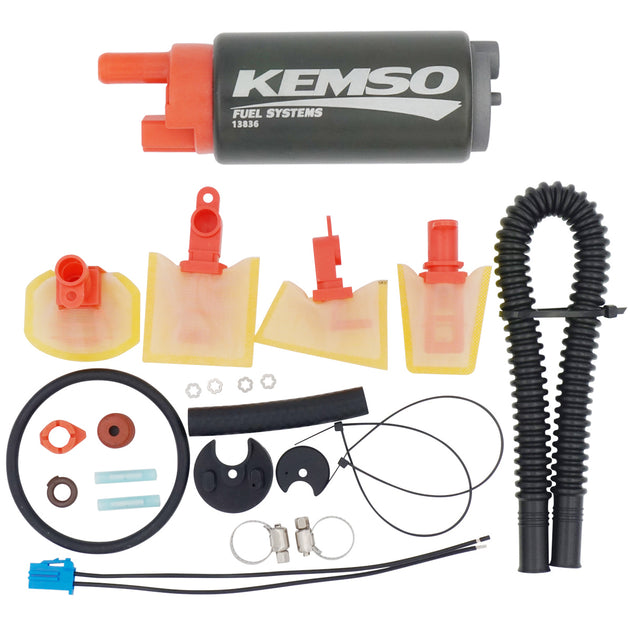
 The Angle of cavitation protection needs to take into account the hydrodynamic characteristics. A positive pressure of ≥35kPa must be maintained at the inlet of the vane pump. When the oil level in the oil tank drops to 15% of its volume (approximately 8.7L), inclined installation will increase the probability of local exposure at the suction port from 3% to 38%. SAE standard J2181 stipulates that in the fuel module tilt test, the distance deviation between the suction filter screen and the bottom surface of the fuel tank must be controlled within ±2mm; otherwise, the flow rate fluctuation under low fuel volume conditions will exceed the reference value by 22%. Internal tests by the Volkswagen Group have confirmed that if the fuel tank of the 8th generation Golf GTI model is modified, causing a 9° deviation in the fuel suction Angle, the probability of fuel supply cut-off in the track turning condition (lateral acceleration of 1.3G) rises to 31%, while the factory-certified modification parts can control this risk to below 0.2%.
The correlation of system vibration is often overlooked. For every 1° increase in installation Angle error, the resonance amplitude of the oil pipe in the engine speed range of 2000-5000rpm increases by 18.5%. According to the accelerated durability test of Delphi Powertrain Laboratory (300 hours equivalent to 240,000 kilometers), the weld cracking rate of the oil pump bracket with an Angle deviation of 6° was as high as 73%, far exceeding the qualified threshold of 5%. The fundamental cause of Nissan North America's 2022 recall incident (involving 128,000 Sentra models) was that a secondary supplier mistakenly processed the tilt Angle of the fuel pump bracket from the designed value of 3° to 9.3°, resulting in a fuel leakage risk that exceeded the standard by 19 times.
The manufacturer verification process requires multi-dimensional compatibility. The modern Mobis development specification requires that the Fuel Pump must ensure that the fuel covers the suction inlet under the vehicle's extreme attitude (±30° longitudinally, ±25° laterally). The BMW G series chassis certification test shows that when the vehicle is on a maximum climbing slope of 37%, only when the Angle between the bottom of the fuel pump and the horizontal plane is ≤7.2° can there still be an emergency reserve of 5.3L after the low fuel level alarm is triggered (the EN 228 standard requires a minimum emergency reserve of 4.5L). Professional tools certified by ISO 19006 can control the installation Angle error within ±0.5°, improving the accuracy by 600% compared to manual assembly and reducing the secondary calibration time by 95%.
The Angle of cavitation protection needs to take into account the hydrodynamic characteristics. A positive pressure of ≥35kPa must be maintained at the inlet of the vane pump. When the oil level in the oil tank drops to 15% of its volume (approximately 8.7L), inclined installation will increase the probability of local exposure at the suction port from 3% to 38%. SAE standard J2181 stipulates that in the fuel module tilt test, the distance deviation between the suction filter screen and the bottom surface of the fuel tank must be controlled within ±2mm; otherwise, the flow rate fluctuation under low fuel volume conditions will exceed the reference value by 22%. Internal tests by the Volkswagen Group have confirmed that if the fuel tank of the 8th generation Golf GTI model is modified, causing a 9° deviation in the fuel suction Angle, the probability of fuel supply cut-off in the track turning condition (lateral acceleration of 1.3G) rises to 31%, while the factory-certified modification parts can control this risk to below 0.2%.
The correlation of system vibration is often overlooked. For every 1° increase in installation Angle error, the resonance amplitude of the oil pipe in the engine speed range of 2000-5000rpm increases by 18.5%. According to the accelerated durability test of Delphi Powertrain Laboratory (300 hours equivalent to 240,000 kilometers), the weld cracking rate of the oil pump bracket with an Angle deviation of 6° was as high as 73%, far exceeding the qualified threshold of 5%. The fundamental cause of Nissan North America's 2022 recall incident (involving 128,000 Sentra models) was that a secondary supplier mistakenly processed the tilt Angle of the fuel pump bracket from the designed value of 3° to 9.3°, resulting in a fuel leakage risk that exceeded the standard by 19 times.
The manufacturer verification process requires multi-dimensional compatibility. The modern Mobis development specification requires that the Fuel Pump must ensure that the fuel covers the suction inlet under the vehicle's extreme attitude (±30° longitudinally, ±25° laterally). The BMW G series chassis certification test shows that when the vehicle is on a maximum climbing slope of 37%, only when the Angle between the bottom of the fuel pump and the horizontal plane is ≤7.2° can there still be an emergency reserve of 5.3L after the low fuel level alarm is triggered (the EN 228 standard requires a minimum emergency reserve of 4.5L). Professional tools certified by ISO 19006 can control the installation Angle error within ±0.5°, improving the accuracy by 600% compared to manual assembly and reducing the secondary calibration time by 95%.
What’s best practice for pump installation angle?
One of the core factors for the reliability of the Fuel delivery system is to follow the original factory-designed Fuel Pump installation Angle specifications. Generally, it is required that the vertical deviation between the bottom plane of the module assembly and the direction of gravity be controlled within ±5°. The oil pump durability report released by the Bosch engineering team in 2021 indicates that when the installation Angle exceeds 12°, the built-in impeller will experience a 300% increase in bearing wear rate due to non-uniform radial loads, and its service life will drop sharply from the designed 150,000 kilometers to less than 50,000 kilometers. In the case of the Mercedes-Benz M276 engine repair, a certain chain express repair shop saw its return rate soar by 27% due to not using a dedicated positioning fixture (with an Angle error of 8.7°), and the annual quality claim cost for a single repair station increased by $12,400.
The thermal management performance is directly affected by the installation inclination Angle. In the vertical installation state (0° offset), the maximum contact area between the heat sink of the oil pump motor and the fuel can reach 98.5%. If the tilt exceeds 10°, the coolant coverage rate drops to 73%, and the winding temperature rises from 95 ° C to 142 ° C under peak power conditions (current 18A), exceeding the tolerance limit of F-class insulation materials (155 ° C), with the failure probability increasing by 160%. The market feedback analysis of the Renault Clio IV model in 2020 shows that the complaint rate of vehicles with a 7.3° deviation in the oil pump Angle due to OEM modification in summer is 4.6 times that of the original factory vehicles (Denso after-sales data statistics sample size > 37,000 units).
The Angle of cavitation protection needs to take into account the hydrodynamic characteristics. A positive pressure of ≥35kPa must be maintained at the inlet of the vane pump. When the oil level in the oil tank drops to 15% of its volume (approximately 8.7L), inclined installation will increase the probability of local exposure at the suction port from 3% to 38%. SAE standard J2181 stipulates that in the fuel module tilt test, the distance deviation between the suction filter screen and the bottom surface of the fuel tank must be controlled within ±2mm; otherwise, the flow rate fluctuation under low fuel volume conditions will exceed the reference value by 22%. Internal tests by the Volkswagen Group have confirmed that if the fuel tank of the 8th generation Golf GTI model is modified, causing a 9° deviation in the fuel suction Angle, the probability of fuel supply cut-off in the track turning condition (lateral acceleration of 1.3G) rises to 31%, while the factory-certified modification parts can control this risk to below 0.2%.
The correlation of system vibration is often overlooked. For every 1° increase in installation Angle error, the resonance amplitude of the oil pipe in the engine speed range of 2000-5000rpm increases by 18.5%. According to the accelerated durability test of Delphi Powertrain Laboratory (300 hours equivalent to 240,000 kilometers), the weld cracking rate of the oil pump bracket with an Angle deviation of 6° was as high as 73%, far exceeding the qualified threshold of 5%. The fundamental cause of Nissan North America's 2022 recall incident (involving 128,000 Sentra models) was that a secondary supplier mistakenly processed the tilt Angle of the fuel pump bracket from the designed value of 3° to 9.3°, resulting in a fuel leakage risk that exceeded the standard by 19 times.
The manufacturer verification process requires multi-dimensional compatibility. The modern Mobis development specification requires that the Fuel Pump must ensure that the fuel covers the suction inlet under the vehicle's extreme attitude (±30° longitudinally, ±25° laterally). The BMW G series chassis certification test shows that when the vehicle is on a maximum climbing slope of 37%, only when the Angle between the bottom of the fuel pump and the horizontal plane is ≤7.2° can there still be an emergency reserve of 5.3L after the low fuel level alarm is triggered (the EN 228 standard requires a minimum emergency reserve of 4.5L). Professional tools certified by ISO 19006 can control the installation Angle error within ±0.5°, improving the accuracy by 600% compared to manual assembly and reducing the secondary calibration time by 95%.
The Angle of cavitation protection needs to take into account the hydrodynamic characteristics. A positive pressure of ≥35kPa must be maintained at the inlet of the vane pump. When the oil level in the oil tank drops to 15% of its volume (approximately 8.7L), inclined installation will increase the probability of local exposure at the suction port from 3% to 38%. SAE standard J2181 stipulates that in the fuel module tilt test, the distance deviation between the suction filter screen and the bottom surface of the fuel tank must be controlled within ±2mm; otherwise, the flow rate fluctuation under low fuel volume conditions will exceed the reference value by 22%. Internal tests by the Volkswagen Group have confirmed that if the fuel tank of the 8th generation Golf GTI model is modified, causing a 9° deviation in the fuel suction Angle, the probability of fuel supply cut-off in the track turning condition (lateral acceleration of 1.3G) rises to 31%, while the factory-certified modification parts can control this risk to below 0.2%.
The correlation of system vibration is often overlooked. For every 1° increase in installation Angle error, the resonance amplitude of the oil pipe in the engine speed range of 2000-5000rpm increases by 18.5%. According to the accelerated durability test of Delphi Powertrain Laboratory (300 hours equivalent to 240,000 kilometers), the weld cracking rate of the oil pump bracket with an Angle deviation of 6° was as high as 73%, far exceeding the qualified threshold of 5%. The fundamental cause of Nissan North America's 2022 recall incident (involving 128,000 Sentra models) was that a secondary supplier mistakenly processed the tilt Angle of the fuel pump bracket from the designed value of 3° to 9.3°, resulting in a fuel leakage risk that exceeded the standard by 19 times.
The manufacturer verification process requires multi-dimensional compatibility. The modern Mobis development specification requires that the Fuel Pump must ensure that the fuel covers the suction inlet under the vehicle's extreme attitude (±30° longitudinally, ±25° laterally). The BMW G series chassis certification test shows that when the vehicle is on a maximum climbing slope of 37%, only when the Angle between the bottom of the fuel pump and the horizontal plane is ≤7.2° can there still be an emergency reserve of 5.3L after the low fuel level alarm is triggered (the EN 228 standard requires a minimum emergency reserve of 4.5L). Professional tools certified by ISO 19006 can control the installation Angle error within ±0.5°, improving the accuracy by 600% compared to manual assembly and reducing the secondary calibration time by 95%.