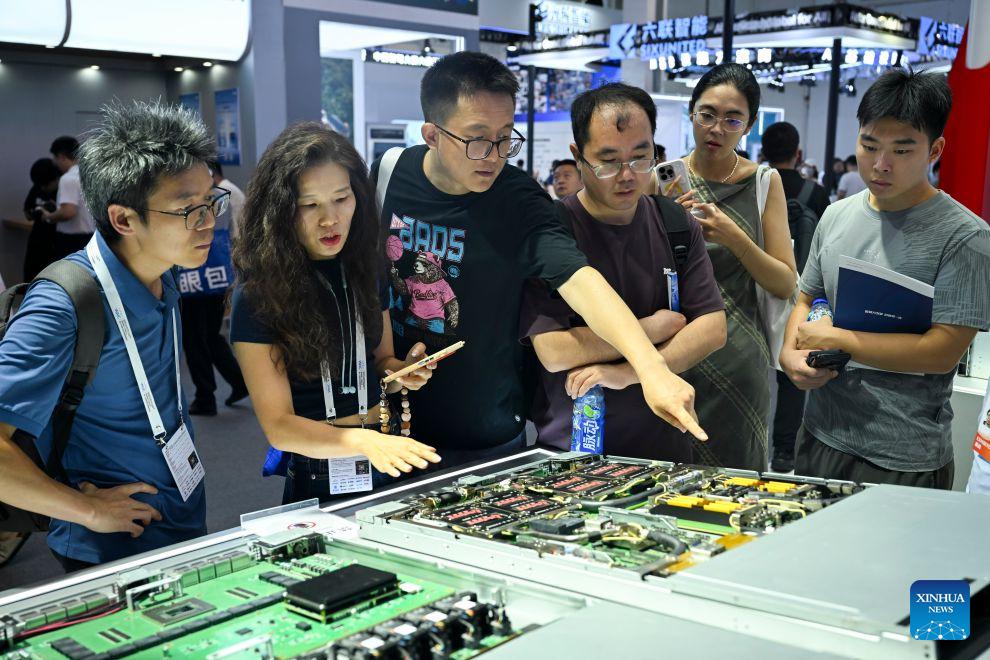
Walking the exhibition floor at the 2026 World AI Conference in Shanghai gives you a front-row seat to how fast domestic computing infrastructure is evolving. The massive spotlight on homegrown AI supernode products, ranging from Huawei's Atlas 950 SuperPoD and Sugon's Dawning 8000 AI Supercluster to systems by Enflame, ZTE, and Kunlunxin, highlights a major push toward hardware self-reliance and ultra-high-density processing power. When you look at how these massive clusters are designed to handle complex large language models and intensive data workloads, it becomes clear that computational density, power efficiency, and cluster scalability are driving the current hardware race. As covered by People's Daily, these breakthroughs mark a critical turning point for domestic semiconductor and server ecosystems.
Digging into the technical side, these supernodes are engineered to tackle massive bottlenecks in data throughput, network latency, and thermal management. Modern enterprise applications require high-performance AI chip clusters capable of running millions of parallel operations with minimal error rates, while keeping operational budgets and energy costs sustainable. By utilizing advanced networking architectures, optimized cooling solutions, and distributed computing models, these systems can dramatically boost processing efficiency and reduce training cycles for heavy AI workloads. Companies are no longer just looking at raw computing capacity; they are demanding end-to-end integration, robust security compliance, and seamless software-hardware ecosystems to maximize their return on investment.
Looking ahead, the primary hurdles for widespread commercial deployment will involve managing supply chain stability, thermal constraints, and software optimization across diverse enterprise architectures. To maintain a competitive edge, continuous R&D investment and tighter collaboration between hardware vendors and software developers will be vital for scaling these supernode platforms efficiently. Ultimately, how well these domestic solutions bridge the gap between high-end research specifications and practical, cost-effective commercial applications will dictate their market penetration and long-term viability over the next 12 to 36 months.
News source: https://peoplesdaily.pdnews.cn/china/er/30052702531