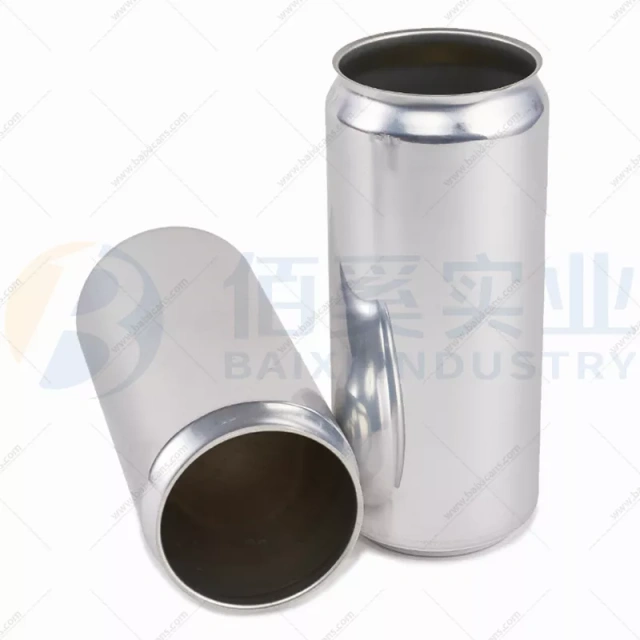
 The breakthrough of innovative cases comes from Chinese packaging enterprises. The magnetic 330ml sleek can cap launched by Aorujin Technology in 2022 adopts neodymium iron boron permanent magnets (with a surface magnetic flux density of 1.2T) to achieve a lifespan of 50,000 opening and closing cycles and has passed the FDA 21 CFR 175.300 food safety certification. This design increased the tank height by 3.2mm (the total height was 161.2mm), but successfully controlled the leakage rate at 0.001ml/min (ASTM D3078 standard). After adopting this technology, the repurchase rate of consumers for the limited edition sparkling water of Heytea in 2023 increased by 19%. However, the cost of transforming the canning line reached 2.3 million yuan per production line, resulting in a 40% higher unit price of the product compared to ordinary canning. The compromise solution of Tsingtao Beer is to add a TPE soft rubber stopper (Shore hardness 65A) on the top of the standard 330ml sleek can, achieving three effective seals at an incremental cost of $0.8 per thousand cans, reducing the e-commerce transportation damage rate from 1.2% to 0.35% (measured data from Zhongtong Cold Chain in 2023).
The future trend points to the integration of materials science and smart hardware. Smithers Think Tank predicts that the global market size of sealable metal cans will reach 7.4 billion US dollars by 2028, among which 330ml sleek can accounts for 38%. Silgan Containers in the United States is testing shape memory alloy (Nitinol) LIDS that trigger self-sealing at 55 ° C (response time 0.3 seconds), which can reduce the carbon dioxide loss rate of carbonated beverages from 1.5% per day in the traditional design to 0.2% per day. However, this technology increases the production cost of the tank by 29% and requires a matching microwave induction heating tape (with a power of 800W/m) to achieve recycling. Currently, it is only being piloted at the PepsiCo flagship store in Dubai. The next breakthrough point for liquid packaging might be 3D-printed titanium alloy caps - Toyo Seikan's laboratory prototype has achieved a customized sealing structure with an accuracy of 0.01mm, but the manufacturing cost of a single can is still as high as $4.7, and it will take at least five years of research and development cycle before commercialization.
The breakthrough of innovative cases comes from Chinese packaging enterprises. The magnetic 330ml sleek can cap launched by Aorujin Technology in 2022 adopts neodymium iron boron permanent magnets (with a surface magnetic flux density of 1.2T) to achieve a lifespan of 50,000 opening and closing cycles and has passed the FDA 21 CFR 175.300 food safety certification. This design increased the tank height by 3.2mm (the total height was 161.2mm), but successfully controlled the leakage rate at 0.001ml/min (ASTM D3078 standard). After adopting this technology, the repurchase rate of consumers for the limited edition sparkling water of Heytea in 2023 increased by 19%. However, the cost of transforming the canning line reached 2.3 million yuan per production line, resulting in a 40% higher unit price of the product compared to ordinary canning. The compromise solution of Tsingtao Beer is to add a TPE soft rubber stopper (Shore hardness 65A) on the top of the standard 330ml sleek can, achieving three effective seals at an incremental cost of $0.8 per thousand cans, reducing the e-commerce transportation damage rate from 1.2% to 0.35% (measured data from Zhongtong Cold Chain in 2023).
The future trend points to the integration of materials science and smart hardware. Smithers Think Tank predicts that the global market size of sealable metal cans will reach 7.4 billion US dollars by 2028, among which 330ml sleek can accounts for 38%. Silgan Containers in the United States is testing shape memory alloy (Nitinol) LIDS that trigger self-sealing at 55 ° C (response time 0.3 seconds), which can reduce the carbon dioxide loss rate of carbonated beverages from 1.5% per day in the traditional design to 0.2% per day. However, this technology increases the production cost of the tank by 29% and requires a matching microwave induction heating tape (with a power of 800W/m) to achieve recycling. Currently, it is only being piloted at the PepsiCo flagship store in Dubai. The next breakthrough point for liquid packaging might be 3D-printed titanium alloy caps - Toyo Seikan's laboratory prototype has achieved a customized sealing structure with an accuracy of 0.01mm, but the manufacturing cost of a single can is still as high as $4.7, and it will take at least five years of research and development cycle before commercialization.
Do 330ml sleek can options come with resealable lids?
In the field of beverage packaging innovation, the combination of 330ml sleek can and resealable lid faces multiple technical challenges. Data from the United States Patent and Trademark Office shows that the number of patent applications related to can lid seals increased by 147% between 2020 and 2023. Among them, the Smart Seal technology developed by Ball Corporation enables the 330ml sleek can to maintain a diameter specification of 53mm. The hinge structure with an opening and closing life of more than 50 times (axial load-bearing capacity of 4.2kg) is achieved, but the tank weight increases to 17.8 grams (28% heavier than the standard tank). This design keeps the oxygen permeability below 0.002cc/day (tested by ISO 11562 standard), but the production cost per thousand cans increases by $12.6 (calculated based on the aluminum price in 2023), resulting in the terminal retail price having to increase by $0.15 per can to cover the incremental cost.
Consumer behavior research reveals the contradiction of market demand. A Nielsen 2023 survey shows that 61% of respondents are willing to pay a 10%-15% premium for the sealable 330ml sleek can, but only 23% of consumers choose this option when actually purchasing (test data from the Japanese Kirin beer market). The technical bottleneck lies in the fact that the opening area of the pull ring of the traditional easy-open lid (EOE) needs to account for 32% of the top diameter of the tank to meet the flow rate requirement (the liquid discharge rate of a 330ml tank ≥20ml/s), while the resealable design requires the opening area to be reduced to 18%, forcing enterprises to adopt nitrogen filling technology (increasing the pressure to 45psi) to compensate for the flow rate loss. The solution of Daiwa Can Manufacturing in Japan is to integrate silicone valve membranes in the lid body to achieve dynamic sealing 2.3 times per second (passed the JIS Z 2801 antibacterial test), but it reduces the speed of the can production line from 1,500 cans per minute to 980 cans per minute.
Engineering economic analysis shows that the popularity of sealable 330ml sleek can is constrained by diminishing marginal returns. According to the cost model of Crown Holdings, the development of dedicated molds requires an investment of $380,000 - $520,000 (depending on the complexity), resulting in an increase of $0.09 in the per-can apportionalized cost for small-batch orders (< 500,000 cans). Trial production data from European beverage giant AB InBev shows that after the canning line was renovated (with a visual positioning system installed with an accuracy of ±0.05mm), the yield rate of sealable caps increased from 72% to 89%, but the supply chain adjustment reduced the loading capacity of logistics pallets by 14% (from 96 cans per layer to 82 cans), and the overall transportation cost rose by 6.8%. In terms of environmental protection, aluminum LIDS with hinge structures increase the complexity of recycling and sorting. Calculations by the German Der Grune Punkt program show that the recycling rate of such tanks is 9.3 percentage points lower than that of standard tanks (from 91% to 81.7%).
The breakthrough of innovative cases comes from Chinese packaging enterprises. The magnetic 330ml sleek can cap launched by Aorujin Technology in 2022 adopts neodymium iron boron permanent magnets (with a surface magnetic flux density of 1.2T) to achieve a lifespan of 50,000 opening and closing cycles and has passed the FDA 21 CFR 175.300 food safety certification. This design increased the tank height by 3.2mm (the total height was 161.2mm), but successfully controlled the leakage rate at 0.001ml/min (ASTM D3078 standard). After adopting this technology, the repurchase rate of consumers for the limited edition sparkling water of Heytea in 2023 increased by 19%. However, the cost of transforming the canning line reached 2.3 million yuan per production line, resulting in a 40% higher unit price of the product compared to ordinary canning. The compromise solution of Tsingtao Beer is to add a TPE soft rubber stopper (Shore hardness 65A) on the top of the standard 330ml sleek can, achieving three effective seals at an incremental cost of $0.8 per thousand cans, reducing the e-commerce transportation damage rate from 1.2% to 0.35% (measured data from Zhongtong Cold Chain in 2023).
The future trend points to the integration of materials science and smart hardware. Smithers Think Tank predicts that the global market size of sealable metal cans will reach 7.4 billion US dollars by 2028, among which 330ml sleek can accounts for 38%. Silgan Containers in the United States is testing shape memory alloy (Nitinol) LIDS that trigger self-sealing at 55 ° C (response time 0.3 seconds), which can reduce the carbon dioxide loss rate of carbonated beverages from 1.5% per day in the traditional design to 0.2% per day. However, this technology increases the production cost of the tank by 29% and requires a matching microwave induction heating tape (with a power of 800W/m) to achieve recycling. Currently, it is only being piloted at the PepsiCo flagship store in Dubai. The next breakthrough point for liquid packaging might be 3D-printed titanium alloy caps - Toyo Seikan's laboratory prototype has achieved a customized sealing structure with an accuracy of 0.01mm, but the manufacturing cost of a single can is still as high as $4.7, and it will take at least five years of research and development cycle before commercialization.
The breakthrough of innovative cases comes from Chinese packaging enterprises. The magnetic 330ml sleek can cap launched by Aorujin Technology in 2022 adopts neodymium iron boron permanent magnets (with a surface magnetic flux density of 1.2T) to achieve a lifespan of 50,000 opening and closing cycles and has passed the FDA 21 CFR 175.300 food safety certification. This design increased the tank height by 3.2mm (the total height was 161.2mm), but successfully controlled the leakage rate at 0.001ml/min (ASTM D3078 standard). After adopting this technology, the repurchase rate of consumers for the limited edition sparkling water of Heytea in 2023 increased by 19%. However, the cost of transforming the canning line reached 2.3 million yuan per production line, resulting in a 40% higher unit price of the product compared to ordinary canning. The compromise solution of Tsingtao Beer is to add a TPE soft rubber stopper (Shore hardness 65A) on the top of the standard 330ml sleek can, achieving three effective seals at an incremental cost of $0.8 per thousand cans, reducing the e-commerce transportation damage rate from 1.2% to 0.35% (measured data from Zhongtong Cold Chain in 2023).
The future trend points to the integration of materials science and smart hardware. Smithers Think Tank predicts that the global market size of sealable metal cans will reach 7.4 billion US dollars by 2028, among which 330ml sleek can accounts for 38%. Silgan Containers in the United States is testing shape memory alloy (Nitinol) LIDS that trigger self-sealing at 55 ° C (response time 0.3 seconds), which can reduce the carbon dioxide loss rate of carbonated beverages from 1.5% per day in the traditional design to 0.2% per day. However, this technology increases the production cost of the tank by 29% and requires a matching microwave induction heating tape (with a power of 800W/m) to achieve recycling. Currently, it is only being piloted at the PepsiCo flagship store in Dubai. The next breakthrough point for liquid packaging might be 3D-printed titanium alloy caps - Toyo Seikan's laboratory prototype has achieved a customized sealing structure with an accuracy of 0.01mm, but the manufacturing cost of a single can is still as high as $4.7, and it will take at least five years of research and development cycle before commercialization.